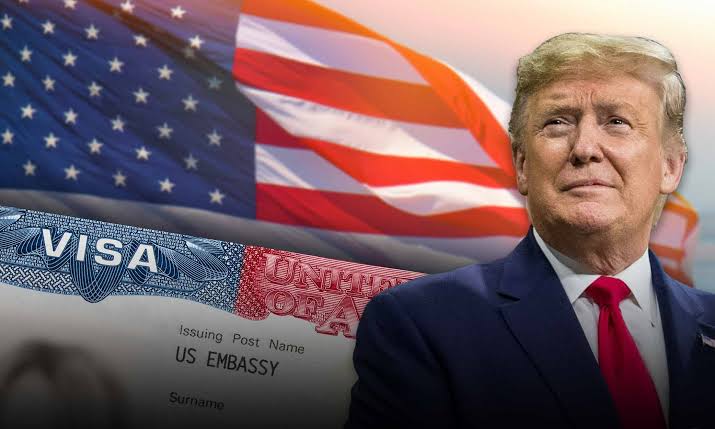
A major legal victory has been secured for international students and foreign journalists in the United States. A federal judge has struck down a Trump administration policy that sought to limit how long they could remain in the country.
US District Judge F. Dennis Saylor IV issued the final ruling on Monday, November 16, 2026. The policy was declared unlawful after a coalition of universities, educators and media unions challenged it in court.
The decision removes restrictions that could have disrupted studies, research and international journalism.
Court Rejects Visa Restrictions
The ruling was delivered by the US District Court for the District of Massachusetts. Judge Saylor found that the Department of Homeland Security (DHS) had failed to provide sufficient legal justification for the proposed changes.
He described the policy as: “Arbitrary, capricious, an abuse of discretion, and otherwise not in accordance with law.”
The court granted the challengers' request for summary judgment. The government's opposing request was rejected.
The final rule was vacated under the Administrative Procedure Act. This means it was set aside, rather than simply delayed.
What the Government Had Proposed
The policy was introduced in July 2026. It sought to replace the existing duration-of-status system with fixed admission periods.
Under the proposed changes:
-
International students: F-1 visa holders would be limited to four years before needing an extension.
-
Exchange visitors: Certain J-1 visa holders would face similar time limits.
-
Foreign journalists: I-visa holders would be restricted to 240-day stays.
-
Chinese journalists: Their permitted stays would be limited to 90 days.
Previously, international students could generally remain in the country for the duration of their approved academic programmes, provided they maintained their immigration status.
Foreign media representatives could receive longer periods of admission under the previous arrangements.
Judge Raises Concerns Over Education
Particular attention was given to the impact on international students. Judge Saylor said the restrictions could interfere with opportunities that Congress had intended to protect.
He warned that the policy could make it difficult for students to complete lengthy academic programmes. Doctoral studies, which often take several years, could be disrupted by repeated extension applications.
The restrictions could also prevent students from changing their academic specialisations or pursuing joint degrees. The judge questioned whether DHS had the authority to impose such limitations on educational opportunities.
Journalists Also Faced Restrictions
Foreign journalists were another group affected by the proposed policy. Under the plan, media representatives would have been admitted for 240 days at a time. Extensions would have been required for those wishing to remain longer.
Chinese journalists would have faced even shorter periods of 90 days. The restrictions raised concerns about press freedom and the ability of international media organisations to operate in the United States.
The lawsuit was supported by The NewsGuild-CWA and other labour organisations representing journalists and educators.
Why the Policy Was Challenged
The legal action was brought by a coalition of higher education organisations and labour unions. The groups argued that the proposed restrictions would create unnecessary administrative costs and uncertainty.
Universities also warned that students could struggle to complete their programmes under the proposed system. Concerns were raised about the effect on academic research, international recruitment and the ability of foreign journalists to report freely.
The court had previously blocked the policy in September, before its planned implementation. The November 16 ruling went further by setting aside the final rule after considering the parties' applications for summary judgment.
What Happens to International Students Now?
The ruling preserves the previous duration-of-status arrangements for the affected visa categories. For international students, this means they can generally remain in the United States while maintaining the conditions of their approved studies.
Exchange visitors and foreign media representatives also avoid the fixed admission periods introduced by the disputed policy.
However, the ruling does not remove other immigration requirements. Visa holders must continue complying with the conditions attached to their respective immigration categories.
The Trump administration may still challenge the final judgment through an appeal.
A Major Development for Foreign Students and Media
The decision comes amid wider efforts by the Trump administration to tighten immigration controls. It also highlights the role of courts in reviewing government policies that affect education, employment and freedom of expression.
For international students, the ruling offers greater certainty when planning long academic programmes. For foreign journalists, it removes the proposed short-stay limits that could have disrupted reporting assignments.
The United States remains a major destination for international education. More than 1.1 million international students were enrolled during the 2023–24 academic year, according to official figures.
For now, the court's decision is a significant relief for students, universities and international media organisations.