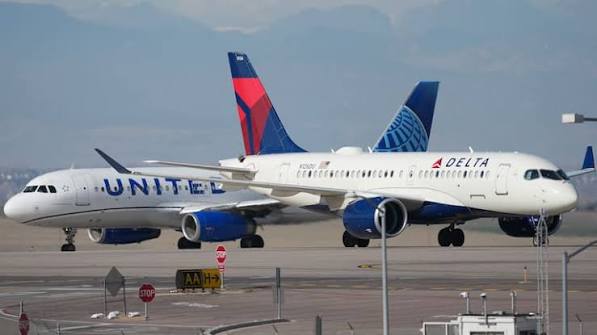
Flights across the United States are gradually returning to the skies. But the disruption caused by a major air traffic control communications failure is far from over.
The Federal Aviation Administration (FAA) lifted its nationwide ground stop at 8.15pm Eastern Time on Friday, November 13. The restriction had lasted more than four hours, leaving thousands of passengers stranded and disrupting travel across the country.
Transportation Secretary Sean Duffy warned that normal operations would take time to restore. Airlines must first reposition aircraft and confirm that pilots and cabin crew are available.
Thousands of Flights Disrupted
The ground stop triggered widespread disruption at major airports. More than 6,600 flights were cancelled, while thousands more were delayed, according to flight-tracking data cited by Reuters.
Passengers were left waiting at departure gates and inside crowded terminals. Some had already boarded their planes before being asked to disembark.
At several airports, aircraft were seen waiting on taxiways. Long queues also formed at airline service desks and car rental counters as travellers searched for alternatives.
The disruption affected domestic and international travel. Some flights were cancelled outright, while others were delayed or diverted.
What Caused the Ground Stop?
The FAA ordered the halt after intermittent telecommunications problems affected radar and communication systems used by air traffic controllers.
Duffy said instability had been detected across control centres and regional facilities. Inconsistent information from radar and communication systems raised safety concerns.
More than 3,500 aircraft were airborne when the ground stop was issued, according to the Transportation Secretary. Established safety procedures were followed as aircraft were brought in to land.
Duffy attributed the failure to ageing equipment. He said outdated switches and routers had become overloaded with data, affecting the reliability of information used by controllers.
The FAA later confirmed that system functionality had been restored before departures were allowed to resume.
Officials Rule Out Evidence of an Attack
The incident raised questions about whether the outage was caused by a cyberattack.
Homeland Security Secretary Markwayne Mullin said investigators had found no evidence of hostile activity. He also dismissed suggestions that artificial intelligence had caused the disruption.
Officials said the investigation was continuing. No evidence of deliberate interference had been presented in the updates released after the incident. The outage was not linked to the separate Microsoft disruption reported earlier in the week.
Passengers Describe Airport Chaos
The disruption left travellers uncertain about when they would reach their destinations. At New York's LaGuardia Airport, passenger Tiara Johnson told AFP that her flight to Orlando had been repeatedly delayed. She said the departure time had shifted several times, leaving her unsure whether to continue waiting or change her plans.
Other passengers said they had received conflicting information. Some were reportedly told that weather conditions had caused delays, while airport departure boards continued displaying scheduled flights.
At Las Vegas airport, passengers also faced long queues at car rental counters as they looked for alternative transport. For some travellers, the disruption meant an unexpected extra night away from home.
Ageing Aviation System Under Scrutiny
The outage has renewed scrutiny of America's air traffic control infrastructure. Duffy has argued that the system requires major modernisation. He has urged Congress to provide the funding needed to replace ageing equipment rather than continue with temporary repairs.
The Transportation Department had sought $30.1 billion for air traffic control upgrades. Duffy also called for additional resources to complete the wider modernisation programme.
The incident has highlighted the risks of relying on outdated technology in one of the world's busiest aviation networks.
Recovery Expected to Take Time
Although the FAA has reopened US airspace, the lifting of the ground stop does not mean every flight can depart immediately. Aircraft and crews must be returned to their scheduled positions. Airlines also need to manage backlogs and accommodate passengers whose journeys were disrupted.
Travellers have been advised to check directly with their airlines before heading to airports.
The immediate communications problem has been addressed, but the wider disruption may continue for days. The longer-term challenge will be ensuring that critical aviation systems are reliable enough to prevent a similar shutdown.